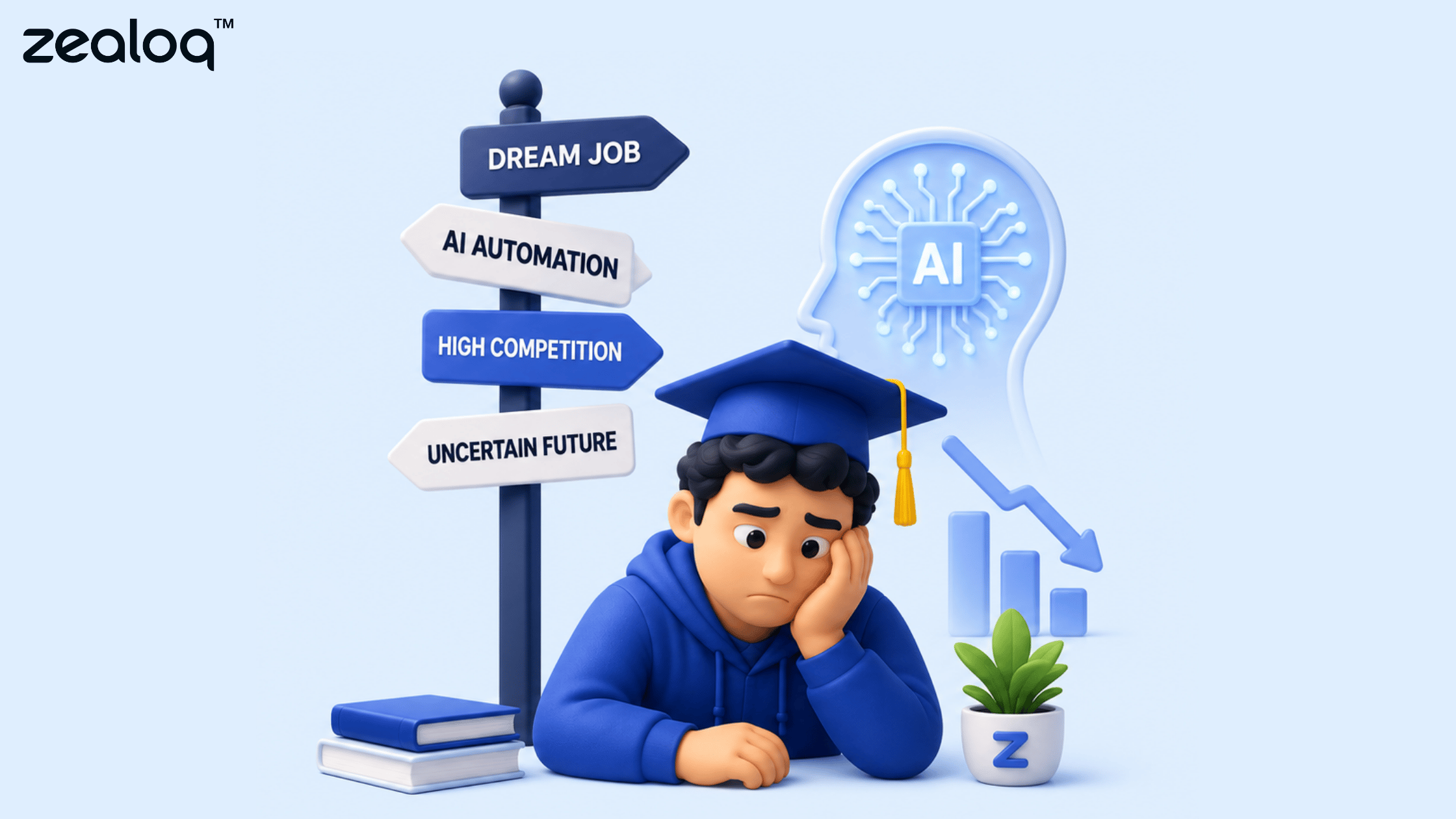
For years, the path seemed straightforward.
Go to a good university, get a degree, apply for jobs, and eventually get hired.
Today, that path looks very different.
Recent reports about Stanford graduates struggling to find entry-level jobs surprised many people. If graduates from one of the world's top universities are finding it difficult, it's natural to wonder what this means for everyone else.
The answer isn't simply "AI is taking jobs."
What's really happening is that companies are changing what they expect from someone joining the workforce.
AI isn't replacing jobs. It's replacing beginner tasks.
Most people imagine AI replacing entire professions.
In reality, it's replacing small tasks that used to be part of many entry-level roles.
Writing first drafts, creating reports, summarizing meetings, answering routine questions, or generating simple code can now be done in seconds.
These were often the tasks junior employees handled while learning the business.
When AI takes over that work, companies can accomplish more without hiring as many junior employees. That's one reason entry-level hiring has become more competitive.
A degree is no longer enough on its own.
A university degree still matters, but employers increasingly treat it as table stakes rather than
evidence someone can contribute right away. The questions hiring managers ask have shifted from "Can this person work effectively with AI?" to "Have they built anything real? Can they solve an actual business problem, not just a textbook one?"
In many fields, a portfolio, an internship, an open-source contribution, or a side project now carries nearly as much weight as a transcript. There's a certain irony here because AI can generate code, reports, and presentations for anyone, employers care less about whether a candidate can produce something and more about whether they understand why they're doing it.
AI is only part of the story.
Artificial intelligence gets most of the attention, but it isn't the only reason hiring has slowed.
Many companies hired aggressively during the pandemic and are still adjusting their teams.
Higher interest rates have made it harder for startups to raise funding, reducing hiring across the tech industry.
AI has simply accelerated these changes by helping smaller teams do more work.
Experience is becoming the new currency.
Companies want evidence that you can solve problems in real situations.
That experience doesn't always come from a full-time job.
It can come from internships, volunteering, freelance work, open-source contributions, personal projects, or even building something for yourself.
The people who stand out aren't always the ones with the highest grades.
They're often the ones who can show what they've done.
The most valuable skill isn't using AI.
As AI becomes more accessible, generating content or completing routine tasks is no longer a differentiator. What increasingly sets professionals apart is their ability to evaluate AI-generated outputs, identify errors, ask the right questions, and apply critical thinking to solve real business problems.
These are the skills that remain difficult to automate and are becoming increasingly valuable in today's workplace.
So what should graduates focus on?
Rather than competing with AI, graduates should learn how to use it effectively to enhance their work and productivity.
At the same time, practical experience has become more valuable than ever. Real-world projects, internships, and portfolios often demonstrate capability more effectively than academic credentials alone.
Employers are also looking for candidates who understand business needs, communicate clearly, and can solve real problems. As routine tasks become increasingly automated, these human skills will continue to set professionals apart.
Above all, graduates should embrace continuous learning. In a rapidly evolving job market, the ability to adapt may be the most valuable skill of all.
The opportunity is still there it just looks different.
The story about Stanford graduates isn't a sign that careers are disappearing.
It's a reminder that the rules are changing.
Landing your first job may be harder than it was five years ago.
But companies still need curious people who can solve problems, learn quickly, and use AI as a tool instead of seeing it as a threat.
The entry-level job isn't disappearing.
It's simply evolving and the people who evolve with it will be the ones who succeed.