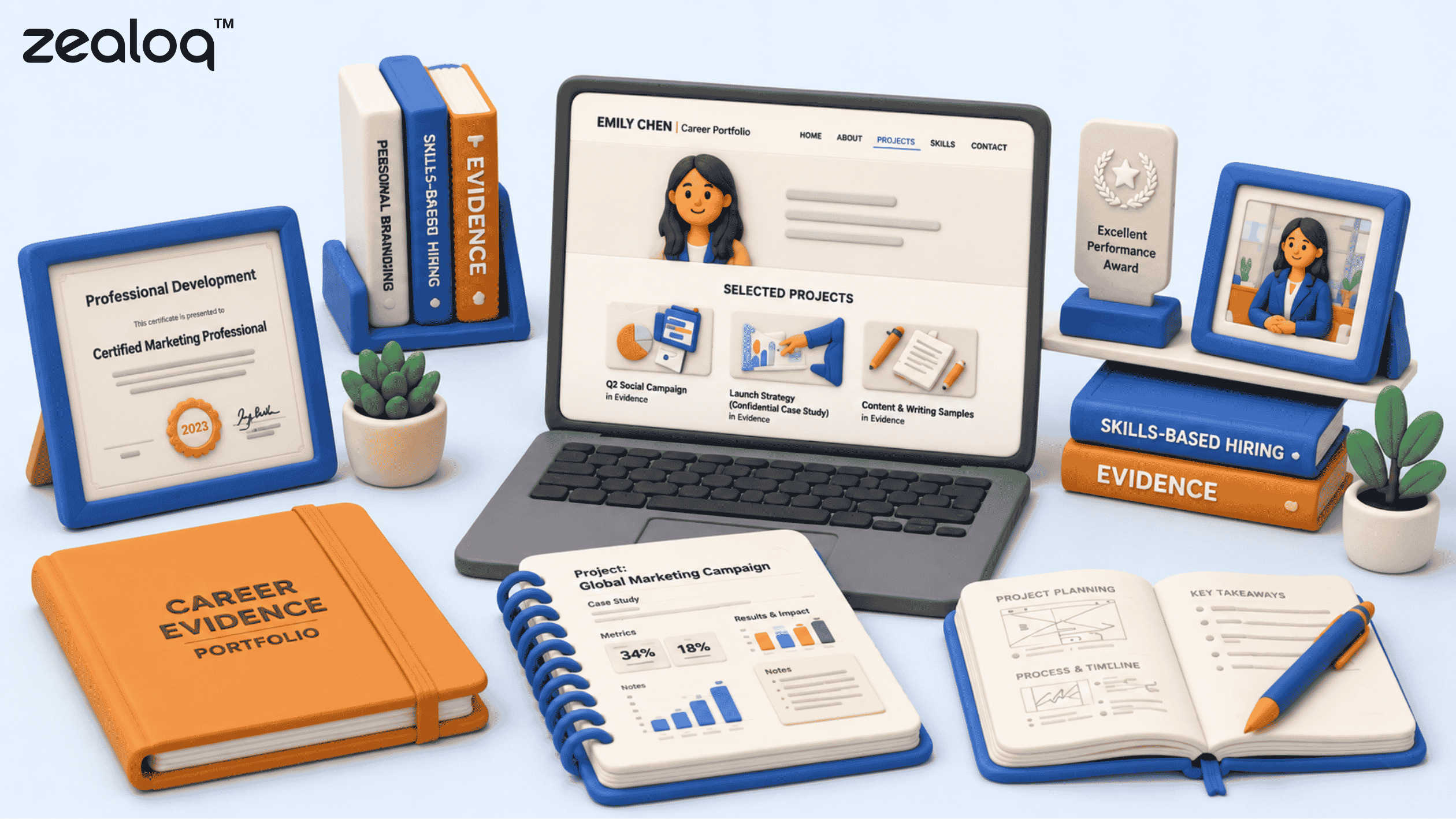
Hiring has changed. Employers no longer want to see a list of qualifications. They want proof of your skills through projects, writing samples, designs, code, presentations, research, or measurable results. Research also shows that hiring managers value work samples because they provide real evidence of what candidates can do.
That's where a career portfolio comes in.
The problem is that most advice ends with "build a portfolio" without explaining what to include. What if you're just starting out? What if your best work is confidential? Where should you host it, and how do you keep it up to date?
A career portfolio isn't just a folder of old documents or a longer version of your resume. It's a carefully chosen collection of work that proves your skills and supports the claims you make about your experience.
A Career Portfolio Is Evidence, Not Decoration
Many people think a portfolio is just a place to store their work. In reality, its purpose is to prove your skills. If your CV says you're a project manager, show projects you've led. If you call yourself a strong writer, include writing samples. If you claim to be analytical, share reports, dashboards, or case studies that demonstrate your thinking.
A strong portfolio replaces claims with evidence. Instead of asking employers to trust what you say, you show them what you can do, making your experience far more convincing.
The Seven Building Blocks of an Effective Portfolio ➱
1. A Short Professional Introduction
Begin your portfolio with a brief introduction that explains who you are and the kind of work you do. Keep it focused rather than turning it into a career history. A few paragraphs are enough to explain the problems you enjoy solving, the areas you specialize in, and the type of opportunities you're looking for next. This gives readers the context they need before they explore the rest of your work.
2. Skills Supported by Evidence
A list of skills on its own doesn't say much. Words like "leadership," "communication," or "organized" are easy to claim, so employers look for evidence instead. Show how those skills appeared in your work. You might describe leading a team of 12 people, running weekly planning meetings, creating onboarding documentation used across the department, or improving employee retention by 18 percent. Specific examples make your skills far more believable.
3. Projects
For most professionals, the projects section will be the largest part of the portfolio. Each project should tell a clear story by explaining the problem, your role, the actions you took, the outcome, and what you learned. This gives employers enough context to understand not only what you accomplished, but also how you approach challenges and make decisions.
4. Results
Whenever possible, show the impact of your work with measurable results. Numbers make achievements easier to understand, whether that's increasing conversions by 24 percent, reducing onboarding time by 40 percent, or growing a community from zero to several thousand members. If your work isn't easy to measure, describe the outcome in practical terms instead. You could explain how you improved a process, launched a successful initiative, or received consistently positive feedback from colleagues or clients. The goal is to show the value your work created.
5. Recommendations and Feedback
Feedback from other people can strengthen your portfolio because it adds independent proof of your abilities. Consider including LinkedIn recommendations, client testimonials, excerpts from performance reviews, or examples of internal recognition. If the feedback comes from your workplace, remove any confidential information and make sure you have permission to share it where necessary.
6. Professional Development
Professional development deserves a place in your portfolio, but it doesn't need to be the main focus. Include certifications, courses, workshops, or conference talks that genuinely improved your knowledge or changed the way you work. It's better to highlight a few meaningful learning experiences than to list every certificate you've earned.
7. Contact Information
Finish your portfolio with a simple contact section. Include your email address, LinkedIn profile, personal website, or other professional contact details so employers or clients can easily get in touch after reviewing your work.
⦿ Building a Portfolio When You're Just Starting Out
Many people believe you need years of work experience before building a career portfolio. In reality, a portfolio is simply a collection of work that shows what you're capable of. That work doesn't have to come from a full-time job. It can include personal projects, university assignments, volunteer work, freelance projects, or anything else that demonstrates your skills.
For example, if you're interested in marketing, analyze successful campaigns and explain why they worked. If you're pursuing software engineering, build applications that solve real problems. Designers can redesign existing products and explain the thinking behind their decisions, while aspiring HR professionals can create onboarding guides, interview templates, or employee handbooks. Writers can publish articles, financial analysts can evaluate public companies, product managers can write product strategy documents, and data analysts can build dashboards using public datasets.
The goal isn't to pretend you have experience you don't. It's to show employers how you solve problems, make decisions, and communicate your work. For early-career professionals, a few thoughtful, self-directed projects can often say more than a résumé with limited work experience.
Presenting Confidential Work the Right Way
Many professionals can't share their best work because it contains confidential company or client information. That doesn't mean you have to leave it out of your portfolio. You simply need to present it in a different way.
Instead of uploading the original files, turn the work into a case study. Explain the problem, your role, the steps you took, and the results you achieved. Remove or anonymize anything confidential, such as company names, client details, financial data, or other sensitive information, unless you have permission to share it. The goal isn't to reveal private information. It's to show employers how you think, solve problems, and create results while respecting confidentiality.
Where Should Your Portfolio Live?
There's no single correct platform, so choose one that fits your profession and is easy for others to access. A personal website works well for most professionals, while technical professionals often pair one with GitHub. Designers tend to favor Behance, and a Notion workspace can be a strong fit for consultants, marketers, and general business professionals. Newer career-focused platforms, such as Zealoq, are also making it easier to present skills, achievements, and verified experience in one place. A downloadable PDF still has its place, especially for interviews or applications where internet access might be limited.
In the end, the platform matters far less than accessibility. If someone can find your work in under a minute, you've chosen well.
Common Mistakes to Avoid
The strongest portfolios are often defined as much by what they leave out as by what they include. Avoid the temptation to upload everything you've ever produced curate your best work instead, and never post a file without context explaining what the reader is looking at and why it matters. Focus on outcomes rather than responsibilities, and update the portfolio regularly instead of letting it sit untouched for years and then rebuilding it from scratch.
A simple habit helps here: after every meaningful project, ask yourself what evidence from that experience is worth preserving. Over time, that small discipline builds a portfolio without requiring a major overhaul later on.
A Simple Structure to Follow
You don't need elaborate design or specialized software to put this together. A practical portfolio might include a professional summary, a skills section, selected projects, results, case studies, recommendations, professional development, and contact information. That's enough for most professionals, and the portfolio will naturally grow in depth and scope as your career does.
Final Thoughts
A CV tells employers where you've been. A portfolio demonstrates what you're capable of doing and that distinction matters more now than ever, as polished resumes, AI-assisted writing, and standardized application templates make candidates look increasingly similar on paper.
Evidence is harder to fake than a bullet point.
Whether you're a student, an early-career professional, or a seasoned executive, every meaningful project leaves something worth keeping behind: a presentation, a report, a design, a proposal, a lesson learned, or a measurable result.
Collect those pieces deliberately, and over time, they stop being documentation. They become proof.